
Criminal Court Cases in Rockdale County
Rockdale County criminal court cases are divided by jurisdiction. Superior Court is the felony trial court. State Court handles misdemeanors and traffic cases. Magistrate Court issues warrants, conducts first appearances and preliminary hearings, and hears county ordinance cases. A felony may begin in Magistrate Court, yet its accusation or indictment and final trial record belong in Superior Court.
Conyers Municipal Court keeps city ordinance and traffic matters. Those records do not move to the Superior criminal counter merely because the event occurred inside Rockdale County. The correct venue matters more than a broad name search.
If a Conyers police event produces a state-law felony, the records split among several custodians. The police report stays with the city, booking belongs to RCSO, early judicial events may occur in Magistrate Court, and the prosecution proceeds in Superior Court. A misdemeanor usually moves to State Court. Following that chain keeps a case search focused on the filed court documents rather than the first arrest narrative.
Rockdale Felony and Misdemeanor Counters
The Rockdale County Courthouse directory places the Superior Criminal Division in Room 203 and the State Criminal Division in Room 301 at 922 Court Street NE, Conyers. Ask for a file by case number when possible. Staff can explain whether document images are available or whether a paper or archive file must be retrieved.
Superior Criminal Division
Rockdale County Courthouse
922 Court Street NE, Room 203
Conyers, GA 30012
State Criminal Division
Rockdale County Courthouse
922 Court Street NE, Room 301
Conyers, GA 30012
The county's feasibility material describes high-density criminal-file storage in a fire-resistant vault. That local storage detail helps explain why an older case may require staff retrieval rather than an instant screen result.
The official Rockdale State Court page provides the local counter context.
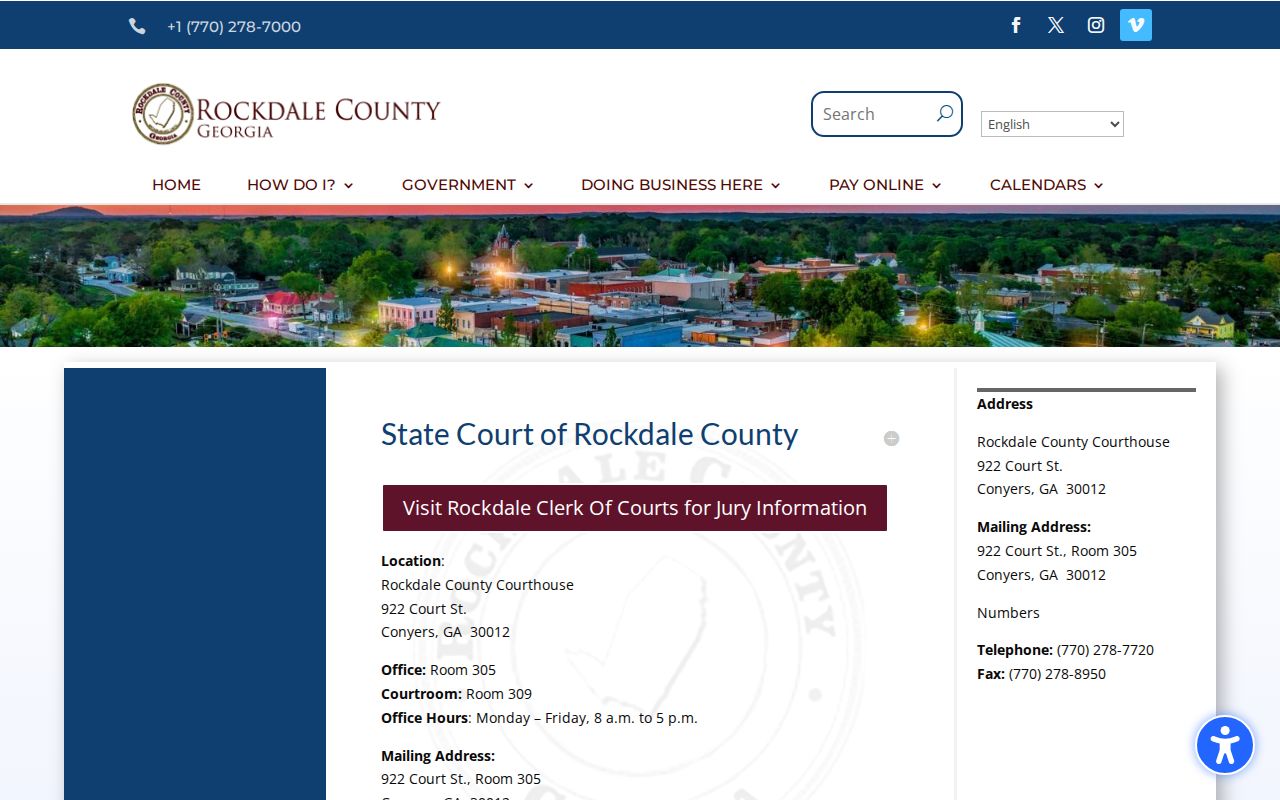
Its room-level details help direct misdemeanor and traffic record requests to the right office.
Rockdale County Case Record Searches
The Georgia Courts E-Access gateway lists Rockdale Superior and State Courts as participating courts and routes users to a provider. It is not one complete, free statewide trial-court database. An account may be required, and coverage, fees, document access, and search syntax can differ by provider.
- Open the state e-access gateway and select a provider that covers Rockdale Superior or State Court.
- Choose Rockdale and the correct court division before entering a name.
- Use a case number when known; otherwise combine the party name with the filing year or case type.
- Read the docket in date order and distinguish the filed charge from the final disposition.
- Contact the Rockdale clerk for missing images, archive files, copies, or certification.
| Field Label | Type | Required | Notes |
|---|---|---|---|
| Last name | Text | Usually for name search | Use the legal spelling and try known variants. |
| First name | Text | Usually for name search | Add it to narrow common surnames. |
| Case number | Text | No | The best identifier when available. |
| Court or county | Dropdown | Normally | Choose Rockdale Superior or Rockdale State. |
| Case type or year | Select/text | No | Provider fields and coverage vary. |
When Rockdale E-Access Falls Short
A provider result can omit an image, an older case, or a record outside its date coverage. That absence does not prove the case never existed. Contact the Clerk of Superior and State Courts and give the name, approximate filing date, court, and case number if known. Ask whether the index is electronic and whether the file is in active or archive storage.
A provider printout is also not the same as a certified court copy. For a judgment that must show the official outcome, ask the clerk for certification and confirm the copy process before visiting.
The manifest's official participating-court provider matrix illustrates how Rockdale electronic access is routed.
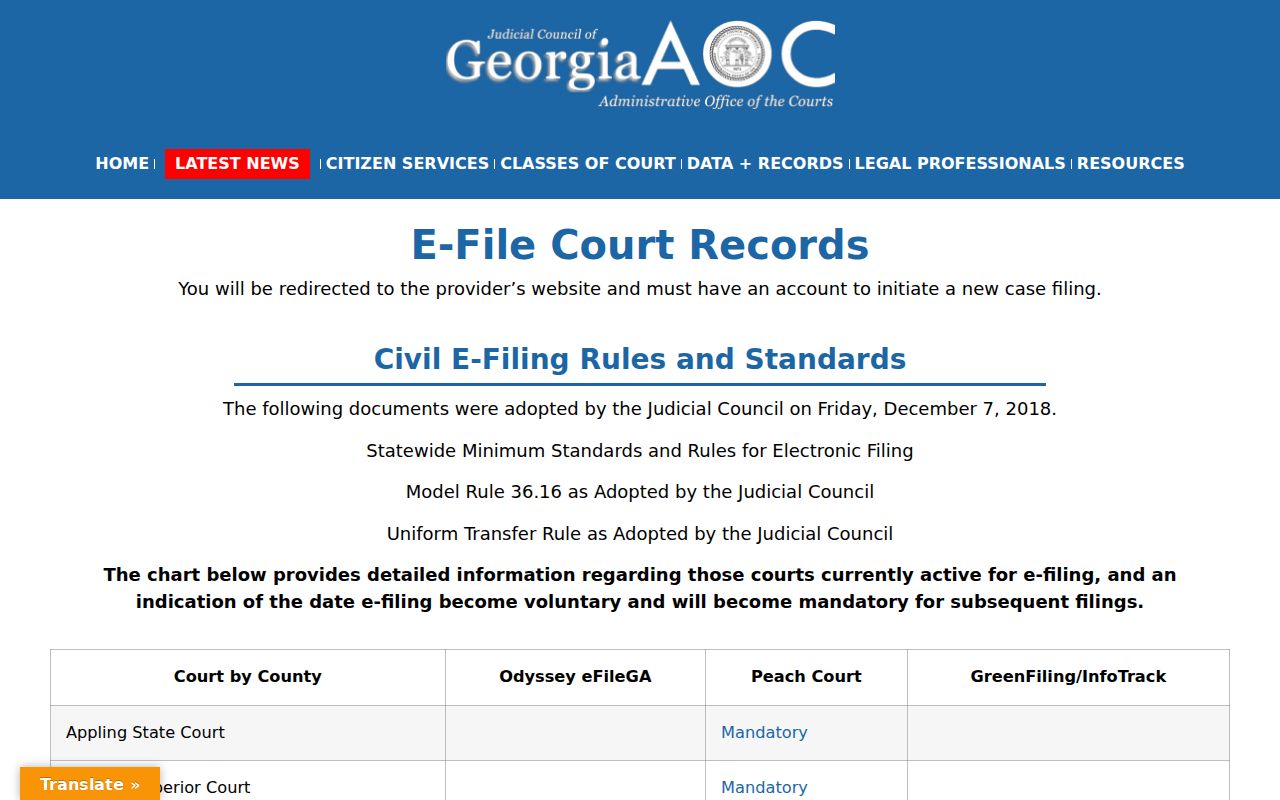
The matrix is a route to participating services, not a promise that every Rockdale criminal case document is online.
What a Criminal Case File Contains
A Rockdale County criminal case file is case-centered. It can show how the prosecution changed from the first filed charge through motions and the final judgment. That differs from a GCIC history, which is person-centered, and a jail booking record, which is custody-centered.
| Case Number & Court | Identifies the Rockdale division and the specific prosecution. |
|---|---|
| Charging Document | An accusation or indictment states charges actually filed in court. |
| Docket Entries | Lists filings, attorney entries, motions, orders, and calendar notices. |
| Hearing Dates | Shows scheduled arraignments, motions, pleas, trials, and reviews. |
| Disposition & Judgment | Records dismissal, plea, acquittal, conviction, or other final result. |
| Sentence & Conditions | May state confinement, probation, fines, restitution, and later revocation filings. |
Filed Charges Versus Booking Charges
The charge on a booking entry captures an early point in the case. A prosecutor may amend, merge, decline, or replace it after reviewing the evidence. The accusation or indictment shows what moved forward, while the judgment is the best source for the outcome. Never report an arrest label as though it were a conviction.
- Accusation
- A formal charging document commonly used without a grand-jury indictment where law permits.
- Indictment
- A charging document returned by a grand jury.
- Disposition
- The result of a charge, such as dismissal, plea, acquittal, or conviction.
- Dead docket
- A Georgia status that pauses a prosecution without serving as an acquittal.
Matching the docket to the certified judgment resolves many conflicts between Rockdale booking and court records.
Financial screens may show fines, statutory surcharges, restitution, and payment status, yet they should not be read without the signed judgment. A probation order, revocation filing, or appeal notice may also appear after the first disposition entry. When the docket seems incomplete, ask whether a later order is stored as a separate image or under a related case event.
Criminal Case Stages in Rockdale County
Magistrate Court may handle a warrant, first appearance, bond issue, or preliminary hearing before a felony file reaches Superior Court. State misdemeanors generally proceed in State Court. Dates vary by case, so the docket and current calendar are more reliable than a generic timeline.
Case flow: Charges Filed › Arraignment › Pretrial › Plea or Trial › Disposition › Sentencing
Rockdale Ordinance and Municipal Files
County ordinance matters are kept by Magistrate Court. The official ordinance procedure says its clerk retains the original citation, filed papers, rulings, and fine or restitution payments. Conyers city ordinance and traffic cases instead belong to Conyers Municipal Court.
The official Rockdale ordinance source is shown below because it identifies a distinct record custodian.
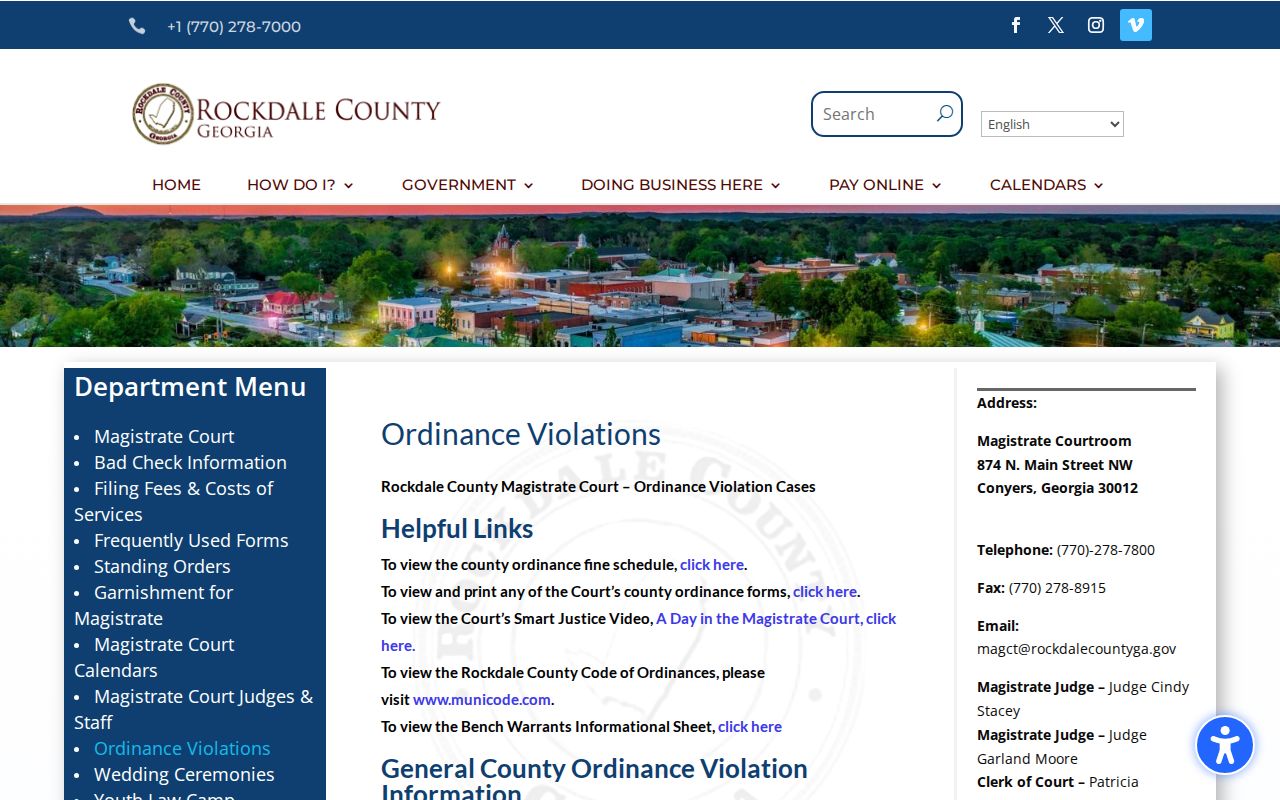
Checking the issuing court prevents a fruitless search at the Superior criminal counter.
Federal Criminal Cases Near Rockdale
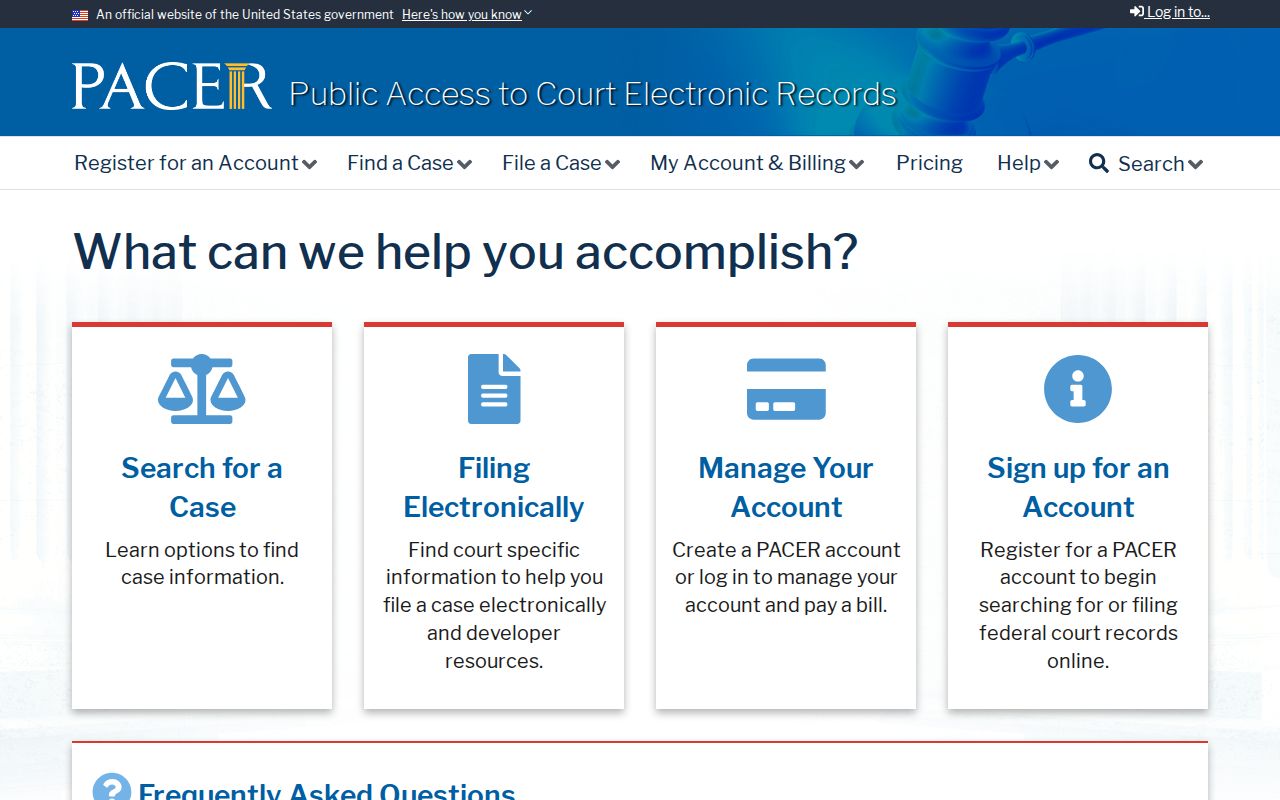
Federal cases are outside the Rockdale clerk's files. Rockdale County lies in the U.S. District Court for the Northern District of Georgia. PACER is the official federal docket and document service after account registration. Current federal fees and waiver rules should be checked before searching.
The Northern District source in the image marks the separate federal channel.
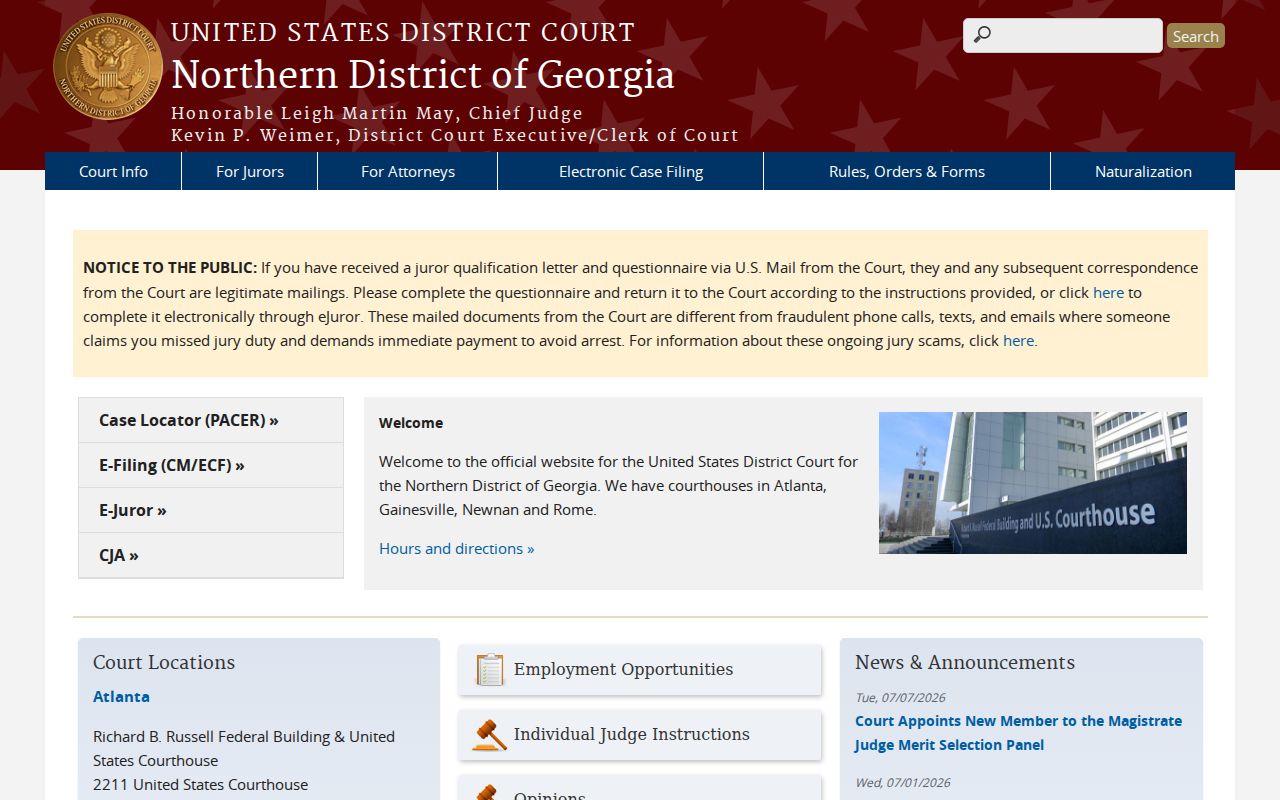
A federal complaint, indictment, or judgment will not appear simply by asking the Rockdale County clerk.
PACER supplies the docket layer shown in this official source.
Sealed federal warrants and filings remain unavailable even through a public account.
Access Rules for Case Records
Georgia's Open Records Act supports access to public agency records, but court access and executive-agency requests are not identical. Sealed exhibits, grand-jury material, protected victim data, and juvenile records do not become public merely because related docket entries exist.
Online views may redact fields or omit documents. Ask the clerk for the public, segregable part and the reason for any withholding. A restriction under O.C.G.A. § 35-3-37 affects eligible criminal-history dissemination and is not the same as destroying every courthouse file. A separate sealing order may control court access.
The Open Records Act's three-business-day response framework does not promise full production within three days. An office may instead state when records will be available, identify lawful charges, or cite an exemption. Certification is a separate clerk service.